Hurricane-ready landscaping: what to do before June
A storm-ready garden starts months before the forecast. These are the checks we make on our own clients' gardens every spring.

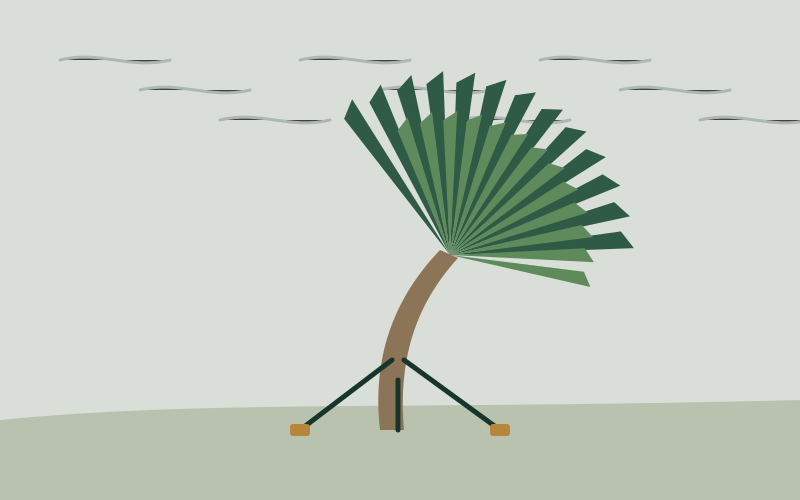
Hurricane season starts on June 1. Most storm damage to gardens isn't bad luck: it's a weak tree, a clogged drain or a loose pot that was waiting for a strong wind. Spring is the right time to deal with all three, while nurseries are stocked and tree crews aren't booked solid.
Start with the trees
Large trees cause the most damage when they fail. Walk your property and look for dead branches, branches rubbing against the roof, cracks in the trunk or mushrooms at the base. Anything that looks wrong deserves a visit from a certified arborist.
Good pruning thins the canopy so wind passes through it. Topping a tree, cutting it back hard to stubs, does the opposite: it weakens the tree and the regrowth breaks easily. If someone offers to top your trees before the season, say no.
Palms: don't over-prune them
It's tempting to cut palms back to a few fronds to make them sleek before a storm. Please don't. A palm needs its green fronds to stay strong, and over-pruned palms are more likely to fail. Remove only dead or hanging brown fronds and any coconuts or seed pods that could become projectiles.
Check your drainage
- Clear gutters, downspouts and yard drains so heavy rain has somewhere to go.
- Walk the property after a big summer rain and note where water stands for more than a day.
- Make sure beds and terraces slope away from the house.
- Keep mulch a few inches back from the foundation and away from drains, where it can float and clog them.
Plan where loose items will go
Pots, furniture, umbrellas, decorative stones and grills all become projectiles in high winds. Decide now where each one goes when a storm is coming: the garage, a shed or inside. Heavy planters that can't move should be grouped against a wall, out of the wind.
Plant for the long run
When you're adding trees, choose species with a good track record in Florida storms. Live oaks, sabal palms, gumbo limbo and sea grape tend to hold up well. Plant them with enough room for their mature size, away from the house and power lines, and stake new trees properly for their first year.
Healthy roots matter more than anything. Trees in compacted soil or squeezed between a driveway and a wall have shallow roots and topple more easily. Generous planting areas and deep, infrequent watering build stronger root systems.
Irrigation, lighting and the small things
Switch your irrigation timer to manual before a storm. The ground will get more than enough water, and running sprinklers into saturated soil only weakens roots. Afterward, check heads and drip lines for damage before you turn the schedule back on.
Low-voltage landscape lighting is built for outdoor weather, but check that fixtures are firmly staked and the transformer is mounted off the ground, and switch it off at the transformer if flooding is likely. Finally, keep a few basics in the garage before June: tree stakes and soft straps, a tarp, a pruning saw and work gloves. They're hard to find the week a storm is on its way.
After the storm
Stay away from downed lines and hanging branches. Photograph damage before cleaning up for insurance. Leaning young trees can often be straightened and staked within a few days if the roots are intact. Palms that lost fronds usually recover if the bud at the top survived. Give them time before you decide to remove them.
If you'd like a second pair of eyes before the season, our spring site walks include a storm-readiness check of trees, drainage and layout.
Has designed gardens across north Palm Beach County since 2012. Every plan starts as a hand drawing on her table.