Salt-tolerant plants for Jupiter and waterfront gardens
Salt spray decides what survives near the coast. Here's what our horticulturist plants, and how she layers it.

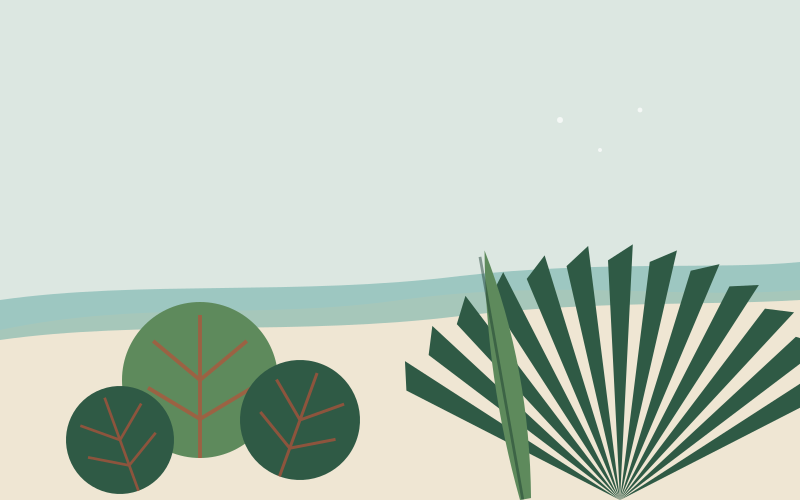
If you live east of US-1 in Jupiter, or anywhere along the Intracoastal, you've probably seen it: a plant that looked great at the nursery turns brown on the side facing the water within a few weeks. That's salt. It rides in on the breeze, settles on leaves and pulls moisture out of them. Some plants shrug it off. Many don't.
The good news is that a coastal garden can be lush. The trick is choosing the right plants and putting the toughest ones where they'll take the hit.
Think in layers, not plant lists
We plan waterfront gardens in three bands. The outer band faces the water or the prevailing wind and gets the most salt, so it needs plants with thick, waxy or silvery leaves. The middle band gets some shelter from the first. The inner band, closest to the house or behind a wall, is where you can grow the more delicate things you love.
Done well, the outer layer works like a windbreak. It slows the breeze, catches the spray and lets everything behind it grow better.
The outer band: plants that take the hit
- Sea grape: big round leaves, fast growing, and about as salt-proof as plants get. Great as a hedge or a small tree.
- Silver buttonwood: silvery leaves that handle salt and wind; it can be shaped into a hedge or grown as a small tree.
- Cocoplum: dense and tidy, a good native hedge that tolerates salt well.
- Sabal palm: Florida's state tree. Handles salt, wind and drought once established.
- Thatch palm: smaller and slower, with fan leaves that suit tight spaces near the water.
The middle band: structure and color
- Coontie: a low, fern-like native cycad that's tough and evergreen.
- Firebush: orange-red flowers that hummingbirds and butterflies love, with moderate salt tolerance.
- Beach sunflower: a bright groundcover for sunny, sandy spots.
- Muhly grass: soft pink plumes in fall, and very little care.
The inner band: what you can grow with shelter
Behind a good outer layer, many tropicals do well: bird of paradise, crotons, ferns in the shade of a wall, even monstera on a protected patio. They won't love direct spray, but they'll thrive with a buffer in front of them.
- Bird of paradise
- Crotons and ti plants for color
- Spider lily, which handles some salt and loves wet spots
Soil and water matter as much as the plant
Coastal soil in Jupiter is mostly sand. It drains fast, which is good for roots but means water and nutrients don't stay long. We loosen and amend new beds, mulch them well, and use drip irrigation so plants root deep. Deep roots make plants steadier in wind and better at recovering from a salty storm.
After a storm that pushes a lot of spray inland, a gentle rinse of leaves with fresh water helps tender plants recover. Your tough outer band won't need it.
Three mistakes we see often
- Planting the delicate plants first and the windbreak later. The windbreak should go in first so it gets a head start.
- Using overhead spray irrigation on salty, windy lots. The water evaporates fast and can leave salt on the leaves; drip puts water at the roots.
- Choosing plants by how they look at the nursery. Nursery plants grow in shelter, so ask how they behave in full coastal exposure.
A simple starting point
If you're starting from scratch on a waterfront lot, a sea grape or cocoplum hedge on the water side, a few sabal palms for height, and coontie and muhly grass in front gives you a garden that looks good quickly and keeps looking good. Everything else can be layered in behind it.
Every lot is different, though. How close you are to the water, which way the wind comes from and what's already growing all change the plan. That's exactly what we look at on a site walk.
Chooses plants for salt, sun and soil, and runs the 90-day aftercare visits after every planting.